WHERE · ORDER BYStart without an account
Filter and sort orders
Find orders over €50, from highest to lowest.
- Level
- Beginner
- Estimated time
- 15 min
Your SQL practice ground
Learn SQL online on a realistic sales database directly in your browser. Run a query, inspect the result, then continue with a structured course and solved exercises.
villeVARCHARproduitVARCHARquantiteINTEGERmontantDECIMAL5 minutes · no registration
Get a score out of 100, see your strengths and receive a recommended path.
One goal, one clear starting point
Choose your goal and go straight to the most relevant practice path.
Understand SQL from scratch and complete a first query.
Analyse revenue, customers, products and trends.
Solve Easy, Medium and Hard series with a score.
Take a quick diagnostic and receive a recommendation.
CTEs, windows, transactions, indexes and PostgreSQL.
Daily SQL challenge
One business problem, a credible dataset and a result to validate. The challenge rotates daily among published exercises.
Find orders over €50, from highest to lowest.
Practise, understand, progress
SQL.tn keeps the useful explanations, while first asking you to manipulate data and validate a result.
Start from a clear business question and an understandable schema.
Test your query in an isolated lab, with no installation.
Compare the result, reveal progressive hints and improve.
Save progress and move on to richer business cases.
Your momentum stays visible
Your personal space brings together real progress without turning learning into a childish game.
Create my free space →See active days and maintain a realistic pace.
Find successes, attempts and activities worth resuming.
Continue the recommended path without searching the catalogue.
Several files, several truths
A spreadsheet is useful for exploring a small dataset or carrying out one-off analysis. When several teams and processes share, connect and change the same facts, a database provides common structure and rules.
See how to choose without opposing the tools →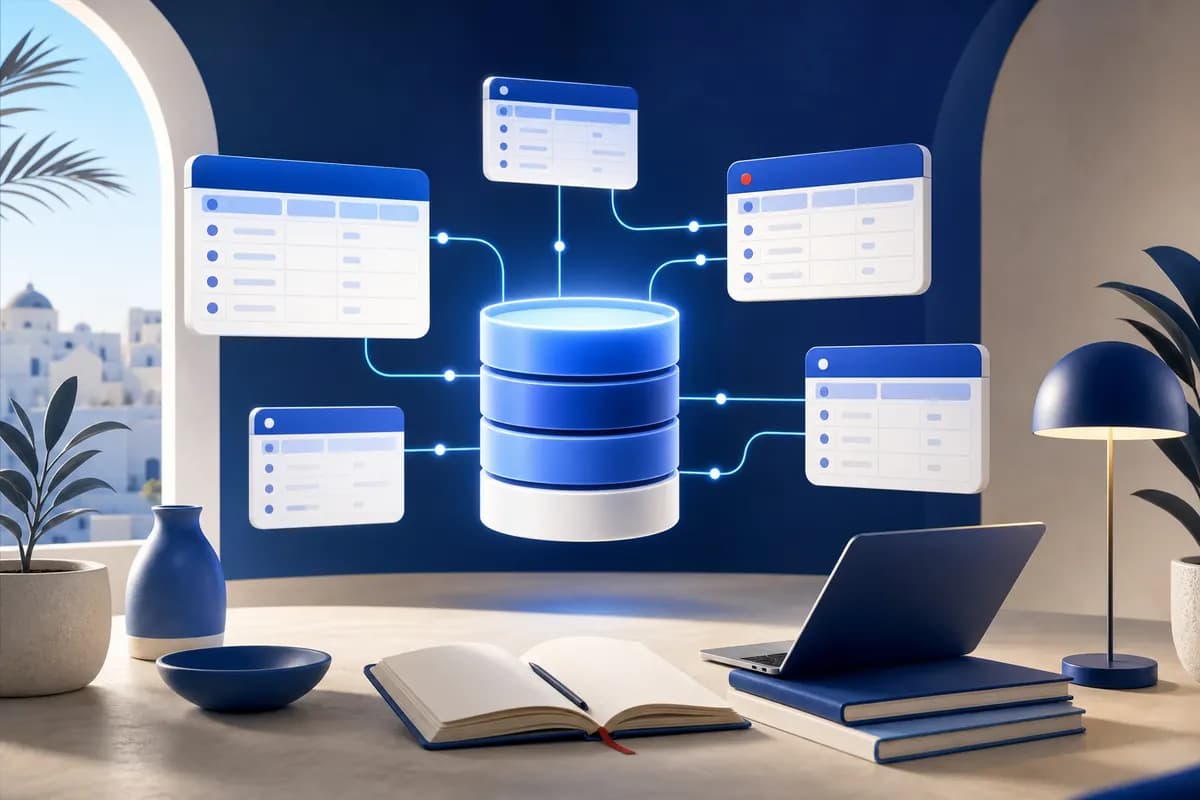
Before and after
Far more than SELECT
Start with six essential families. Advanced capabilities and their actual availability are documented separately.
Separate customers, orders and payments without losing their relationships.
SQL · PostgreSQLTurn a business question into a reproducible result.
SQL · PostgreSQLAdd, correct or remove data precisely.
SQL · PostgreSQLReject negative prices, duplicates and orphaned relationships.
SQL · PostgreSQLConfirm or cancel several related changes together.
SQL · PostgreSQLReuse one shared definition across several reports.
SQL · PostgreSQLFree micro-course · 35 to 45 min
Understand why companies use databases, then write your first query to solve a real problem.
Structured learning path
From your first query to a complete business analysis: filters, calculations, dates, aggregations, joins and CTEs.
Practice and business cases
Show only the name and price of each product.
Level : BeginnerOpen exerciseFind orders over €50, from highest to lowest.
Level : BeginnerOpen exerciseBuild revenue indicators from fictitious sales spread across multiple cities and channels.
Focused skills
They are available during the free 30-day beta and share progress with the learning paths, with no payment or card required.
Launch offer
SQL Pro is activated automatically, with no bank card, payment or automatic renewal.
To test the method and build your first SQL habits.
Free
To become independent with the queries used in business analysis.
49 TND
For analysing business data and building reliable metrics.
99 TND
For building, automating, securing and optimising with PostgreSQL.
149 TND
Guides connected to practice
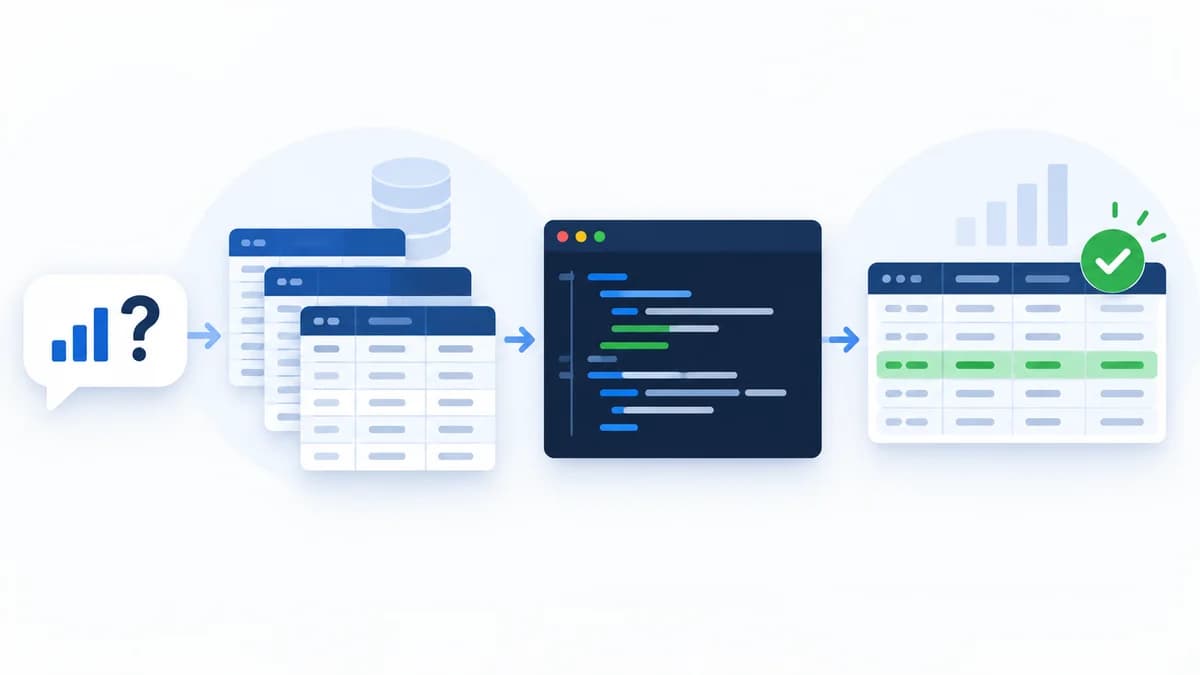
A step-by-step method for moving from a business question to a reliable query, even if you've never used a database.
Read the guide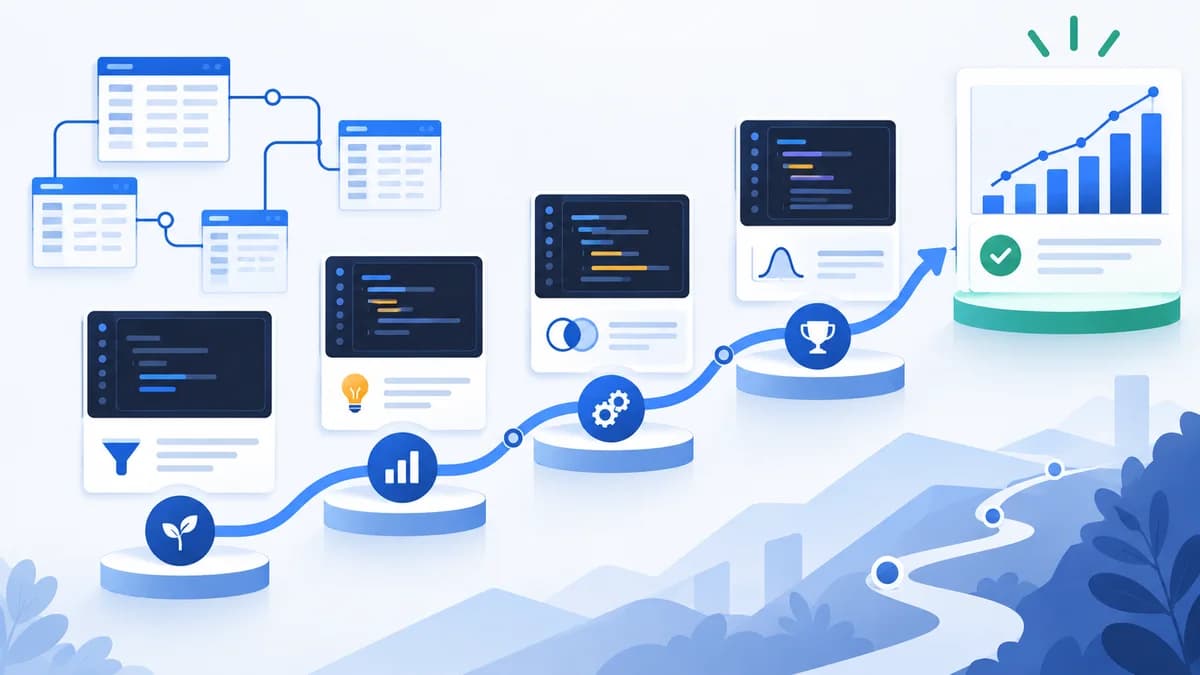
A training method and three exercises explained to progress without transforming the correction into a simple copy and paste.
Read the guide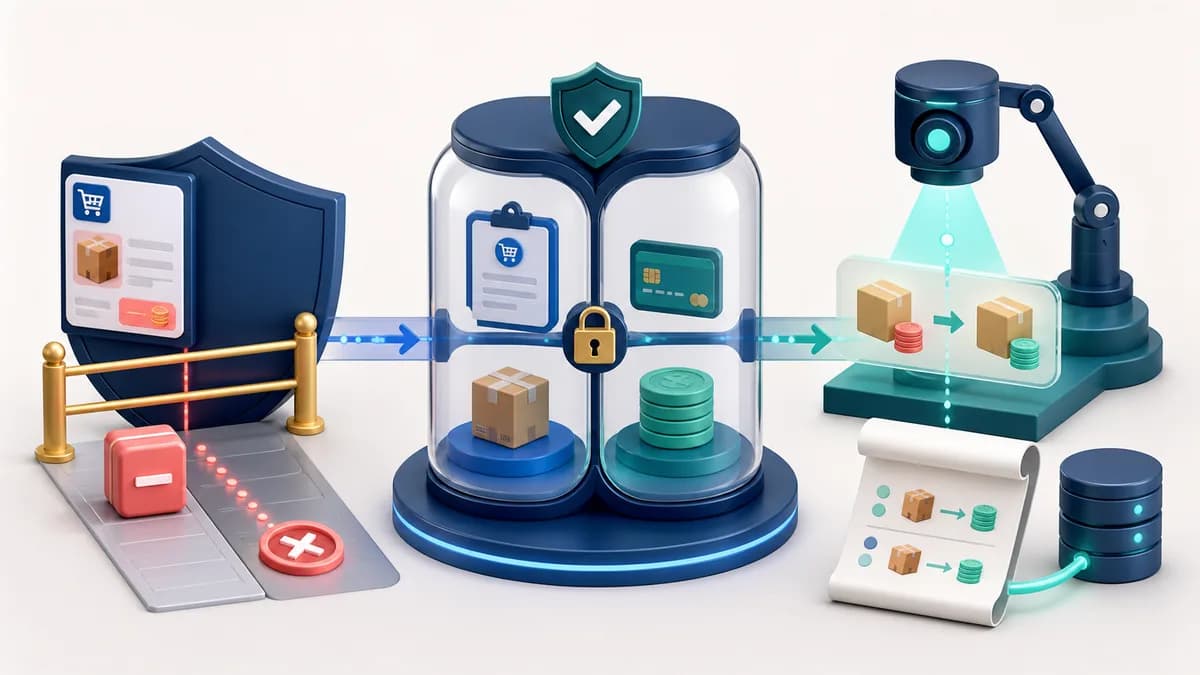
These three tools protect data at different times. Confusing them adds complexity without improving reliability.
Read the guideFrequently asked questions
SQL is a language used by several database management systems to structure, query, modify and control data. PostgreSQL, MySQL and SQL Server are DBMSs, not synonyms for SQL.
SQL.tn is for students, career changers and professionals who want to learn SQL or strengthen their data skills.
No. You can read lessons, view solutions, take the test and use the interactive SQL environment directly in your browser.
After three activities available without an account, the free Discovery space unlocks 8 lessons, 15 exercises with solutions, the level test, SQL environment and guided Sales Analysis project. The project requires a free account to save progress.
Yes. The free Why does SQL exist? micro-course starts with conflicting files before introducing tables, relationships and the first query.